
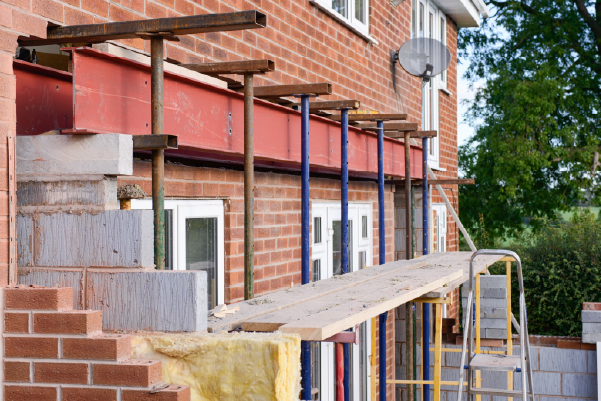
Extensions are one of the most common reasons homeowners need to comply with the Party Wall etc. Act 1996. Whether you’re extending to the side, rear, or over an existing structure, any work that affects a shared wall, boundary line, or neighbouring foundations may require formal Party Wall Notices and, in some cases, a legally binding Party Wall Award.
This guide explains when extensions fall under the Act, what notices may be required, and how the process works in practice.
1. When Extensions Trigger the Party Wall Act
An extension project may require Party Wall involvement where it includes any of the following:
- building an external wall directly on or astride a boundary
- excavating foundations within 3 metres of a neighbouring structure
- digging deeper than a neighbour’s existing foundations
- cutting into, raising, or rebuilding a shared wall
- removing, supporting, or altering part of a shared structure
- forming openings or structural connections to a party wall
Even if an extension is fully on your land, the location, depth, and construction method of foundations often determine whether the Act applies.
2. Section 1 – New Walls on a Boundary
A Section 1 Notice is required where:
- an extension wall is built directly on the boundary line, or
- an existing shared or boundary wall is being replaced
Garden extensions, garage extensions, and side-return extensions often fall into this category. The notice allows the adjoining owner to consent or request surveyor involvement if further protection is needed.
3. Section 6 – Excavation for Foundations
Most extensions involve foundation excavation, particularly where load-bearing walls are proposed.
Under Section 6, a notice is required where:
- excavation is within 3 metres of a neighbouring structure, and
- it is deeper than their existing foundations
Or within 6 metres where piling or deeper structural methods are used.
This is one of the most common Party Wall triggers for domestic extensions.
4. Section 2 – Altering or Using a Shared Wall
Some extensions involve works such as:
tying into a party wall
removing or modifying chimney breasts or projections
inserting steel beams or padstones into a shared wall
cutting away part of a shared structure
raising or rebuilding a party wall
These works require a Section 2 Party Structure Notice.
Extensions often involve both Section 1 and Section 6, and sometimes Section 2 where structural alterations are required.
5. Why Notices and Awards Matter for Extensions
Extension works can introduce risks such as:
- vibration or ground movement from excavation
- temporary access requirements
- cracking to neighbouring walls or finishes
- issues relating to drainage, rainwater, or boundary details
- uncertainty around wall ownership or maintenance responsibility
Serving the correct notice protects your legal position and ensures clarity before any structural or excavation work begins.
Where required, a Party Wall Award will set out:
- how foundations and walls are to be constructed
- access and protection arrangements
- working hours and controls on dust or disruption
- responsibility for repairs and making good
- structural safeguards and monitoring
Once served, the Award allows the extension to proceed safely and lawfully.
6. Common Extension Pitfalls
Homeowners often encounter avoidable problems when they:
- start excavation before serving Section 6 notices
- rely on informal neighbour agreement rather than written consent
- fail to obtain a Schedule of Condition
- assume a boundary fence has no legal relevance
- incorrectly identify adjoining owners
- leave notices until contractors are ready to start
Early advice and proper planning help prevent delays and disputes.
7. The Party Wall Process for Extensions
Step 1 – Review of Plans and Layout
Plans are reviewed to confirm which sections of the Act apply.
Step 2 – Serving Notices
Correct Section 1, Section 6, and/or Section 2 notices are served on all relevant adjoining owners.
Step 3 – Neighbour Response
Neighbours may consent or dissent. No response within 14 days is treated as a dissent.
Step 4 – Surveyor Appointment
Where dissent occurs, surveyor(s) are appointed.
Step 5 – Schedule of Condition
A photographic inspection records the condition of the adjoining property before works begin.
Step 6 – Party Wall Award
A legally binding Award is prepared, setting out construction methods, access rights, and protection measures.
Construction may only begin once the Award has been served.
8. How Bristol Party Wall Supports Extension Projects
Bristol Party Wall provides:
- early assessment of extension proposals
- correct statutory notices and identification of adjoining owners
- Agreed Surveyor or dual-surveying appointments where required
- full Schedule of Condition reporting
- legally compliant Party Wall Awards
- calm, professional communication to reduce neighbour concerns
This helps protect your programme, maintain good relationships, and avoid unnecessary disruption.
Summary
Extensions frequently require Party Wall involvement where they include excavation near a boundary, walls built on a boundary, or structural work affecting a shared wall. Serving the correct notices and securing a Party Wall Award where required protects both owners and ensures the extension proceeds legally, safely, and efficiently.
Bristol Party Wall supports extension projects from notice drafting through to inspections and Awards, helping homeowners avoid delays, disputes, and compliance issues.


